
Planning the perfect father of the groom outfit in the UK is, curiously, one of the more overlooked areas of wedding style guidance. Most guides focus on the groom; a smaller number address wedding guests; far fewer speak directly to the father of the groom, despite the fact that he stands among the most photographed figures at the wedding and carries significant visible presence throughout the day. He wants to look distinguished, feel proud beside his son, and play his part without overshadowing the couple or appearing underprepared.
Getting it right means working through a few clear decisions in the right order: dress code first, then colour and fabric, then how to coordinate with the wedding party, then accessories, and finally the practical question of whether to buy or hire and when to book your fitting. At Gabucci Menswear Bath, we have been helping fathers of grooms navigate exactly this process from our store on Milsom Street for decades. The decisions are straightforward once you know what to prioritise.
Morning dress is reserved for specific occasions: traditional church ceremonies, country house weddings, stately home venues, and any invitation that explicitly states “morning dress.” A complete morning suit consists of a grey or black morning coat with tails, striped trousers, a waistcoat, a white shirt, and either a cravat or a formal tie. It is a precise outfit with a precise context, and wearing it outside a formal daytime setting may be perceived as overdressing rather than an expression of distinction.
One important distinction worth noting: a black-tie evening wedding calls for a dinner suit, not morning dress. Morning dress is a daytime formality. If the ceremony is in the evening or the invitation says black tie, a well-cut tuxedo is the correct choice.
For the majority of UK weddings, a lounge suit is the right answer. It works across hotels, barns, listed buildings, and most licensed venues, and it photographs well in both daylight and indoor settings. A three-piece in dark navy, charcoal, or slate grey sits neatly above a standard two-piece without straying into full formality. That additional waistcoat adds structure and visual weight, which tends to photograph particularly well.
Navy remains the most reliable colour choice across seasons and venues. Charcoal is an excellent alternative for autumn and winter weddings or where a slightly more sober tone is appropriate. Both work with a wide range of shirt and tie combinations, giving you flexibility when coordinating with the rest of the wedding party.
Garden weddings, barn venues, vineyard ceremonies, and coastal settings allow for a more relaxed interpretation, but relaxed does not mean casual. A well-cut blazer in a complementary fabric paired with tailored trousers remains polished when the fit is sharp and the cloth is considered. Avoid jeans, trainers, and prints that compete with the wedding’s visual identity, a useful benchmark is whether the outfit would look appropriate in a photograph kept for decades. Accessories such as a pocket square or a knitted tie can add warmth and personality without disrupting the overall polish.
Spring weddings suit light grey, pale blue, tan, and soft navy. As the temperature rises into summer, pearl grey, sky blue, and stone tones work especially well in natural daylight and against garden backdrops. Fabric is as important as colour here. Linen, wool-linen blends, tropical-weight wool, and cool wool all allow for airflow without sacrificing the structure a jacket requires. For outdoor summer weddings, a lightly structured or unstructured jacket can mean the difference between genuine comfort and a long, uncomfortable afternoon in the heat.
Lighter cloth also photographs elegantly in daylight, reading warmly without competing with flowers, foliage, or the couple’s own palette. There is a reason summer wedding photographs tend to feature soft, natural tones: they harmonise with the setting rather than dominating it.
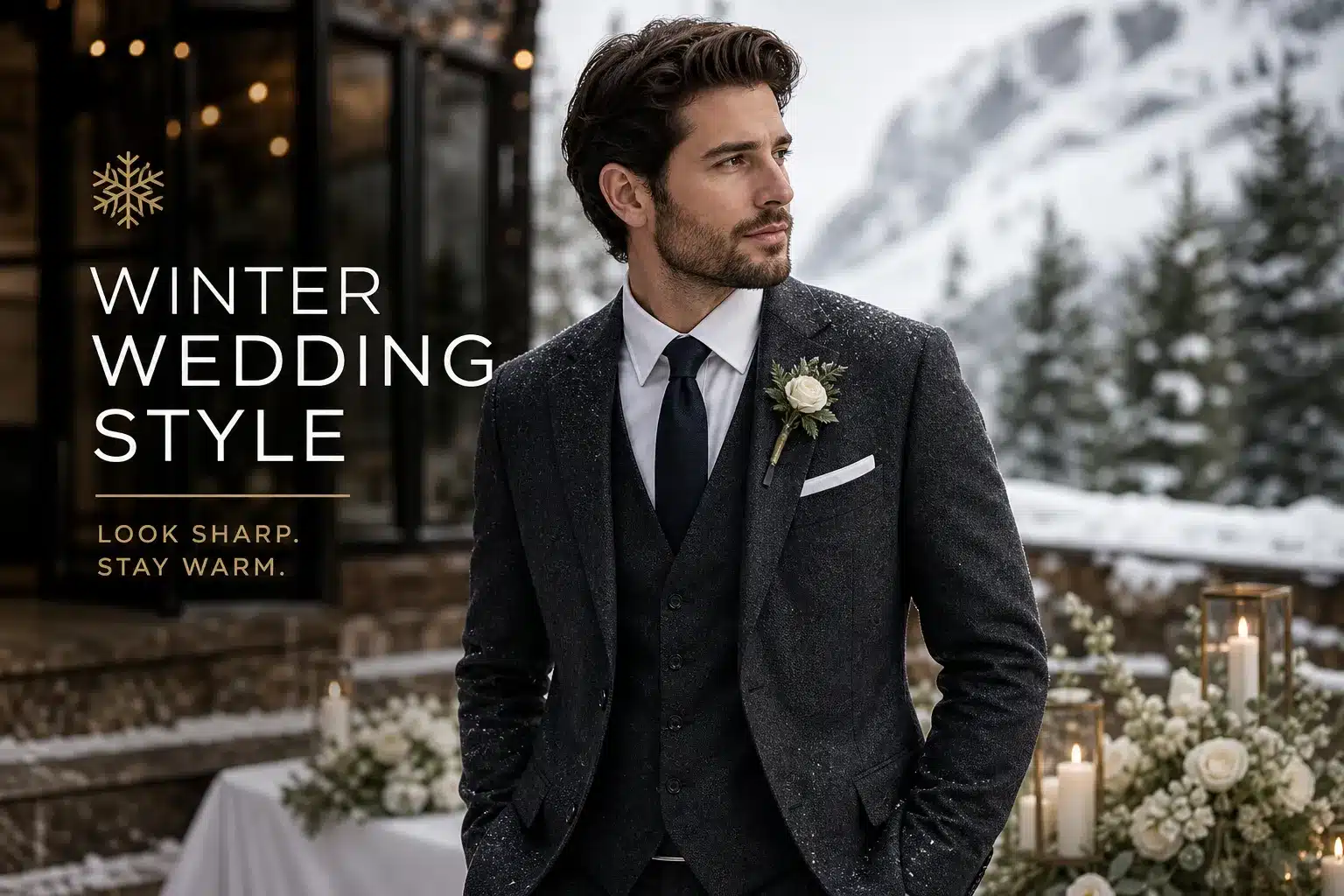
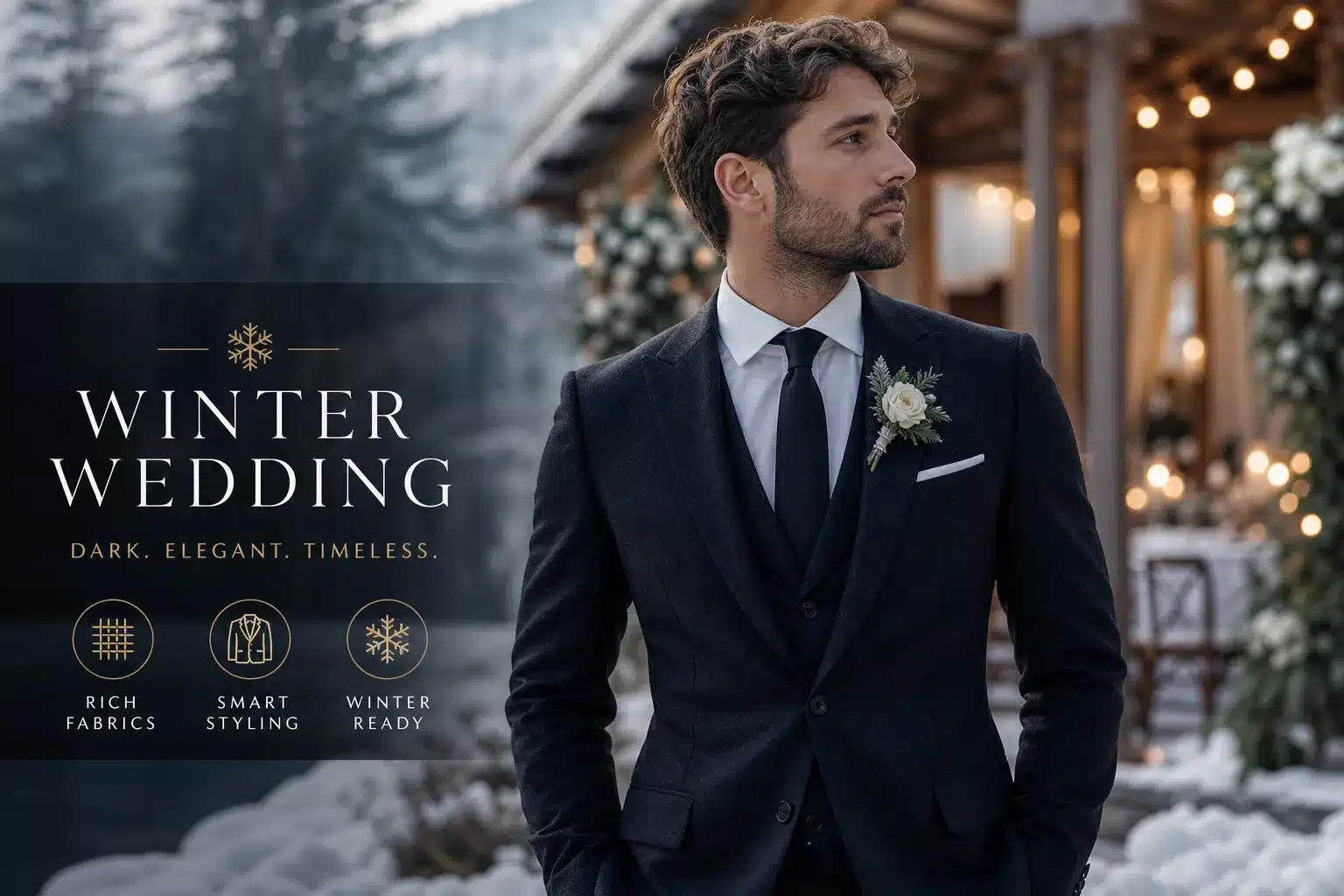
As the seasons shift, so do the appropriate choices. Charcoal, deep navy, burgundy, forest green, and earthy brown all perform well in autumn settings, particularly against stone church interiors and golden foliage. For winter, darker tones such as charcoal, deep navy, and black carry more visual authority in evening and indoor settings. Flannel, heavier wool, and dense structured cloth suit the cooler months and complement the drama of a candlelit ballroom or a historic venue.
Fabric weight also affects how a suit reads on camera. Heavier cloth sits with more gravity in photographs taken in artificial or low light, the default for most indoor evening weddings. Choose the weight of cloth to match not just the temperature, but the setting and the hour.
The primary rule of coordination is not about colour: it is about formality. A father in a lounge suit at a morning dress wedding creates immediate visual discord in photographs, as does the reverse. Before you consider any aesthetic choices, confirm what the groom and groomsmen are wearing and ensure your formality level matches. Ask early, the groom will almost always welcome the question, and knowing the answer makes every other decision considerably easier.
Once formality is confirmed, the colour family approach is the most reliable method for coordination. If the groomsmen are wearing navy, the father might choose charcoal or a deeper, richer navy to distinguish himself without clashing. If the groomsmen are in grey, a darker shade of grey or a warm charcoal provides clear differentiation while remaining visually harmonious in group photographs.
One meaningful point of difference is enough. A different tie, a contrasting pocket square, a subtly textured fabric, or a distinct lapel style all signal that the father of the groom is a separate figure from the groomsmen without creating a jarring contrast. Accessories are particularly efficient here: a pocket square or boutonniere in the wedding’s colour palette connects the father to the party in a way that feels intentional rather than matchy.
The choice between a cravat and a tie does a great deal of work. A cravat lifts a morning suit into its full formal register; a silk tie is the standard companion to a lounge suit; a knitted or wool tie is often recommended for relaxed country weddings where the mood is warm rather than ceremonial. Each reads differently in photographs and carries a different signal about the occasion.
A pocket square should complement the tie without matching it exactly. A tonal fold in a similar shade adds polish, while a contrasting colour drawn from the wedding’s palette adds connection without looking uniform. This is one of the simplest ways to tie the father’s FOG outfit into the broader visual story of the day.
Oxford shoes in black or dark brown are widely considered the most versatile foundation across all formality levels. Derby shoes are a slightly softer alternative that works well with lounge suits. Either choice, properly polished, reads as considered and complete. Cufflinks are one of the few genuinely personal details available at this level of dress: they can be understated, sentimental, or a quiet nod to family history without altering the overall look.
A boutonniere drawn from the same flowers as the wedding arrangements is a small but meaningful touch. It connects the father visually to the party without requiring a matching suit, and it photographs beautifully in the formal portraits that will be cherished for generations.
Hiring makes clear sense for morning suits. A morning coat is a highly specific garment that most men will not wear again after the wedding, and a full hire package (typically including the coat, trousers, waistcoat, shirt, and cravat) removes the need to store or reuse it. In the UK, morning suit hire packages currently range from around £100 to £250 depending on the retailer, fabric quality, and what is included. Top hats and shoes are often charged separately.
Two important caveats: hire suits require early booking, especially between April and September when demand is highest, and the fit will rarely match what a tailor can achieve through proper measurement and alteration. Hire is convenient; it is not the same as a suit that has been adjusted to your specific body.
A well-chosen lounge suit bought outright starts from around £350 and, chosen well, will serve the father of the groom long after the wedding: for business dinners, celebrations, formal events, and future family occasions. That is a very different proposition from a hire suit returned the following Monday.
This is precisely where a specialist boutique makes a genuine difference. At Gabucci Menswear Bath, fathers working with our team have access to a curated range of European designer suits, in-house tailoring, and dedicated fitting appointments with no time pressure. The experience is fundamentally different from browsing a department store rail or ordering a suit online and hoping the measurements translate.
Buying also allows for proper alteration to the individual body, which hire cannot achieve with the same precision. A suit adjusted to you specifically, to your posture, your proportions, your shoulders, will always sit better than one adjusted to a size chart.
For off-the-peg suits with alteration, begin exploring your options two to three months before the wedding, and plan your first fitting or measurement appointment around the six to eight-week mark once the suit has arrived. For made-to-measure or bespoke work, start earlier: four to six months is the safe window, and some fully bespoke processes require six months or more depending on the tailor and the fabric.
The final fitting should happen one to two weeks before the wedding, leaving a clear window for any small adjustments to be completed without urgency. At this stage, try the complete outfit in a single session: jacket, trousers, shirt, tie, shoes, and cufflinks together. This is the only way to confirm that everything works as a system rather than as individual components.
Weight fluctuations in the weeks before a wedding are common, and a later final fitting accounts for any changes since the first measurements were taken. For fathers working with a boutique like Gabucci, booking a dedicated appointment early means the tailor can hold fabric, track progress, and manage the timeline calmly, without the pressure that comes from leaving things too late.
The decisions are logical once you approach them in order. Choose your outfit based on the dress code and formality of the wedding first. Then adapt colour and fabric to the season and venue. Coordinate with the wedding party through considered differences rather than exact matching, and use accessories to create visual connection without duplication. Give yourself enough lead time to get the fit right, because fit is the single detail that separates a good outfit from a genuinely distinguished one.
A father of the groom outfit should feel personal and deliberate, considered rather than assembled at speed. This is one of the most significant days in your son’s life, and the right outfit is one that makes you feel confident and proud, at ease in your own clothes rather than in something that was simply available.
If you would like expert guidance, a personal fitting appointment, and access to a carefully curated range of European designer suits and tailoring, visit us at Gabucci Menswear Bath on Milsom Street in Bath, or get in touch to begin the process. We take as much time as you need, and we have been doing this for decades.