
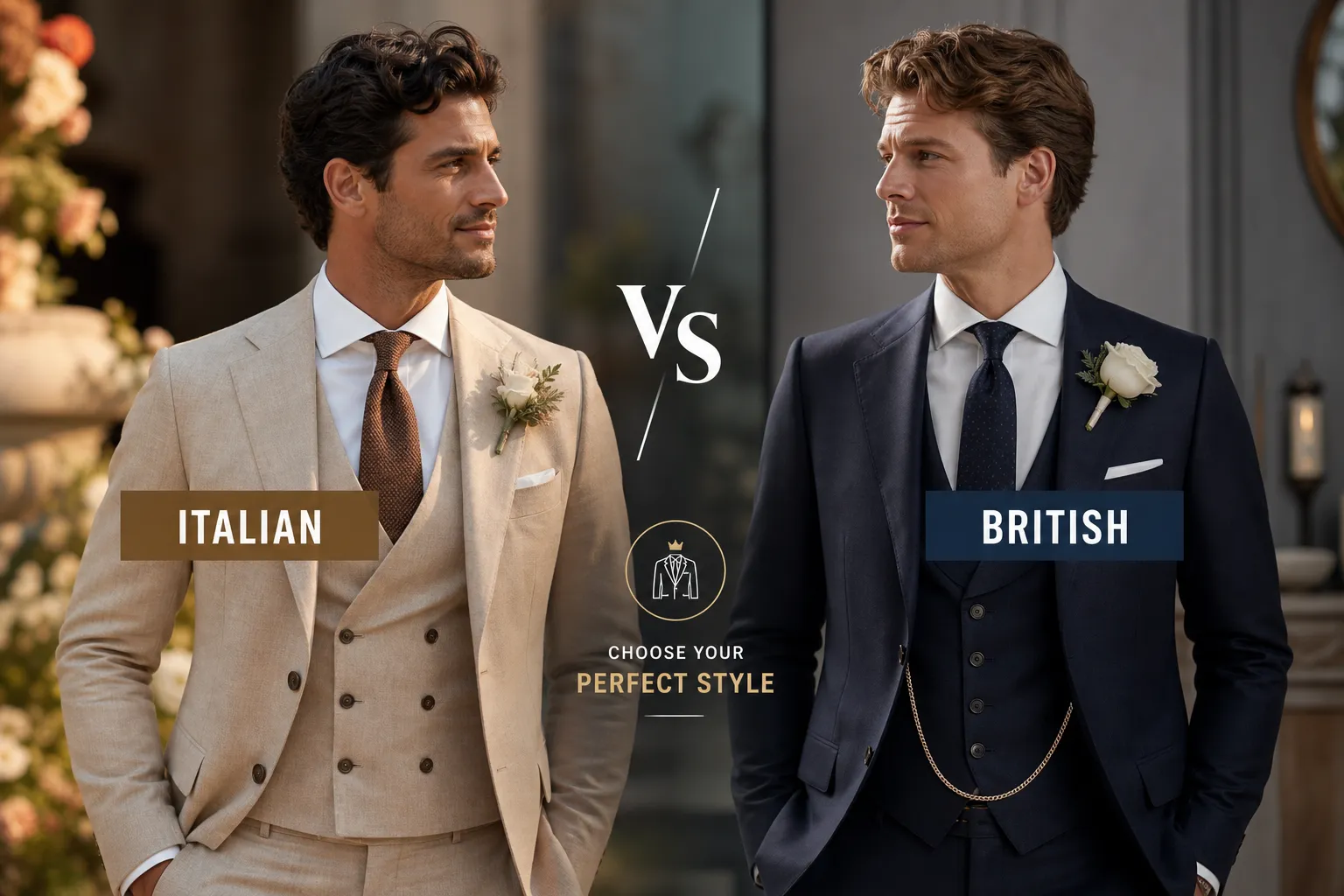
Which is better, an Italian or British suit for a wedding? It is a question that comes up in almost every consultation at Gabucci Menswear’s fitting room on Milsom Street in Bath. A groom sits down, and within a few minutes the conversation arrives at the same fork in the road. The question sounds simple, but the answer reaches further than aesthetic preference. Your body shape, the formality of your venue, the season, and the way you naturally carry yourself all point in a direction. Get it right and the suit feels like a second skin on the day. Get it wrong and you spend the afternoon fighting your own jacket. This guide walks you through the essential differences between Italian and British tailoring traditions so that by the end of it, you will know exactly which suits you.
Before you consider colour, fabric or accessories, you need to understand what separates these two traditions at a structural level. The distinction between Italian tailoring and British tailoring is not merely visual; it is about how the garment is engineered to behave on the body.
A British suit, be it in the Savile Row tradition or as English/Scottish Country Tailoring, is built to project authority. Full canvas construction sits between the fabric and lining, creating a chest that holds its shape independently of the body beneath it. The shoulders are padded and roped, giving a sharp, squared-off line that broadens the upper body and creates the classic “V” silhouette. Waist suppression is present but architectural rather than extreme, and double vents at the rear allow ease of movement whilst maintaining a clean, conservative line. The gorge, where the collar meets the lapel, sits at a lower position, and the longer jacket hem adds proportion for taller frames. Heavier fabrics such as flannel, worsted wool and tweed complement this structured build, making it the natural choice for cooler weather and formal occasions.
At Gabucci we specialise in both Italian and Scottish wool that we commission and then have our suits made. Scottish wool is thick, springy, and heavy. It does not suit unstructured, hence we also produce wool in some famous Italian mills to enable us also provide lightweight Italian tailoring. We can help you find which suits you best and tailor or alter to fit you perfectly.
The Neapolitan suit takes the opposite approach. Designed in the heat of southern Italy, it prioritises comfort and fluid movement over architectural precision. The defining feature is the spalla camicia, a shirt-style shoulder with minimal or no padding, allowing the sleeve to meet the armhole with a natural, slightly pleated finish. The canvas is light or half-weight, and the jacket’s open quarters sweep back from the buttons in a curved line rather than hanging straight. The gorge sits higher, lapels are wider, and the chest pocket is typically a curved barchetta rather than a formal jetted pocket. It is worth noting that this describes the Neapolitan standard; Northern Italian tailoring, particularly Milanese, is considerably more structured and sits much closer to the British tradition in construction.
The better suit is almost always the one built for your specific frame. Understanding how each tradition interacts with your proportions makes the choice considerably more straightforward.
British tailoring is particularly well suited to men with slight or sloping shoulders. The padding and square shoulder line add breadth and create a stronger visual profile, maximising the angle between shoulder and waist to produce a slimming, defined effect. Taller, lighter-framed men also benefit from the longer jacket hem and the added chest volume provided by the full canvas construction. A structured suit builds a frame rather than revealing one, which is precisely what it was designed to do.
The Neapolitan silhouette excels on athletic, broad-shouldered or larger-framed men. Because the suit adds no padding to the shoulder, it avoids exaggerating width that is already there. The tapered waist and close-cut chest define natural muscle without amplifying bulk, and the result is an elegantly streamlined silhouette. Slim, fashion-conscious men also benefit from the clean modern drape, which emphasises the waist and creates a sharp contemporary profile. One note for shorter men, regardless of tradition: avoid double-breasted styles, which shorten the torso visually. A single-breasted jacket with a low button stance creates the longer vertical line you need.
Body shape narrows the field, but venue and tone close it. The two traditions carry very different levels of formality, and the setting of your wedding matters just as much as what you see in the mirror.
British tailoring has a natural home in the most traditional settings. The structured silhouette, heavier fabric and authoritative shoulder line suit a formal church ceremony, a country house reception or a black-tie dinner without compromise. Peak lapels and a three-piece configuration elevate the look further, signalling full dress formality. Worsted wool in navy, charcoal or black delivers the classic gravitas these venues demand, and the full canvas construction holds the garment’s shape across a long day with ease.
Italian tailoring flourishes in relaxed, warm or visually expressive settings. A Neapolitan-influenced suit in lightweight wool, linen or tropical wool is well suited to an outdoor ceremony or an elegant civil setting, and the softer construction pairs effortlessly with an open-collar shirt and a loafer. Modern country house weddings and destination celebrations increasingly favour the elegant informality of an Italian-cut suit precisely because it photographs well in natural light and moves gracefully through a long reception. It signals style and confidence without the formality of a structured British suit.
Fabric weight and fibre often point a groom in a clear direction before silhouette is even considered. Both traditions favour specific cloths that reinforce their construction philosophy, and the time of year is a decisive factor.
Flannel above 340g, worsted wool and heavier twills are the natural companions to British construction. The full canvas in a British suit handles heavier fabric weight well, maintaining the garment’s shape and structure across a full day in a cold church or a draughty country house. Navy and charcoal remain the strongest choices for winter formality; both work across a range of skin tones and coordinate easily with the rest of the wedding party. A wool-cashmere blend adds warmth without excess bulk on particularly cold days.
Linen, tropical wool under 280g and open-weave fabrics are the natural territory of Italian tailoring. The lighter canvas or unlined construction keeps the jacket cool and relaxed, which is precisely why Neapolitan suits became synonymous with warm-weather elegance. Linen does crease, and it is worth knowing that a half-canvas construction handles this far better than a fused jacket, which can bubble and lose its line over the course of a long day. For spring and early summer, lightweight tropical wool gives you the breathability of linen with a slightly crisper, more polished finish. For a practical primer on common cloth choices and how they behave, see this wedding suit fabrics and materials guide.
With silhouette, body shape, venue and fabric covered, the finishing details are what bring everything together. These are not merely decorative choices; they signal which tradition the suit belongs to and should remain consistent throughout the garment and the accessories that accompany it. For a concise overview of common elements to consider when finalising a wedding suit, consult this primer on wedding suit details.
A British suit typically carries a lower gorge, a ticket pocket, surgeon’s cuffs (working sleeve buttons) and double vents at the rear. The lapel features a pronounced belly, a distinct curve that rolls cleanly from the collar. A Neapolitan Italian suit, by contrast, features a higher gorge, a 3-roll-2 button stance where the top button rolls back rather than fastening, a barchetta chest pocket and often a ventless rear to maintain a clean, draped silhouette. Getting these details right matters. A suit that mixes construction philosophies, soft Neapolitan shoulders with a British ticket pocket, and low gorge, will look confused rather than curated.
A British structured suit pairs naturally with a formal spread-collar shirt, a silk tie, an Oxford or Derby shoe and a pocket square in a flat fold. The accessories should reinforce the suit’s authority rather than compete with it. An Italian-style suit invites considerably more expression: an unlined tie in a textured fabric, a shirt with an interesting weave or a subtle pattern, a loafer or monk strap, and a more relaxed pocket square fold that adds personality without formality. The accessories are where individual character enters the look, and getting that balance right between tradition and personal expression is something Gabucci’s team works through in detail during every wedding appointment, see our note on Enhancing the male wedding experience for more on styling and coordination.
Understanding the theory is one thing. Standing in front of a mirror in both silhouettes is another entirely, and that physical comparison is where the decision becomes clear.
After nearly 35 years in specialist menswear on Milsom Street, Gabucci carries European-influenced suits cut to their own specification alongside British-influenced tailoring options, giving grooms a genuine side-by-side experience in a single appointment. The range of fabrics, fits and colours available in-store means you can compare silhouettes, handle the cloths and understand the construction differences in a tangible, unhurried way that no amount of online research can replicate. Learn more about our Bespoke suits and our service, and how we apply these construction principles in practice.
A Gabucci fitting appointment is one-to-one and unhurried, with in-house tailors on hand to assess shoulder structure, waist suppression and hem length in real time. There is no time pressure and no script. The team also helps grooms coordinate the entire wedding party, groomsmen, best men and fathers of the bride or groom included, ensuring cohesion across the group without everyone looking identical. Book an appointment at Gabucci Menswear and arrive at your wedding day decision with complete confidence, knowing that both the suit and the expertise behind it are of a consistently high standard, see our Gabucci’s wedding services for practical next steps.
Ultimately, which is better, an Italian or British suit for a wedding, is not a question of one tradition being objectively superior to the other. It comes down to your body shape, the formality of your venue, the season you are marrying in and the way you want to carry yourself on the day. A slight or sloping-shouldered groom at a formal winter church wedding points clearly towards British tailoring. An athletic groom at a summer garden ceremony points just as clearly towards a Neapolitan-influenced cut in lightweight wool or linen.
Both traditions are exceptional when the execution is right and the fit is precise. The skill lies in understanding which works with your frame and your context rather than against it. If you are still weighing up the Italian or British wedding suit question, the best next step is to try both in the same room with an expert who can show you the difference in real time, and that is exactly what Gabucci Menswear on Milsom Street is here for. For a wider contextual read on how these national traditions compare to one another, you may find this comparison of British, Italian and American suits useful.


