
If you’re searching for father of groom suit ideas, this guide gives you a clear, practical framework, from confirming the dress code to choosing the right fabric and getting the fit right before the day. The groom gets the styling spotlight. The best man has a role to perform. And the father of the groom? He’s often the one quietly standing in the shop, unsure where to begin. What to wear as father of the groom sits in a grey area between formality and personal expression, and getting it right matters more than most fathers initially realise. A well-chosen suit doesn’t just complete the wedding photographs; it signals that the occasion was taken seriously, that care was given, and that the man wearing it knew exactly who he was dressing for.
At Gabucci Menswear Bath on Milsom Street, we see fathers of the groom arrive every season with strikingly similar questions. Which colour works? What fabric makes sense for a July marquee? Should I match the groomsmen? These aren’t complicated questions once you know the framework, and this guide covers each one in turn: dress code, colour, fabric, coordination, fit, and accessories.
The most common and most damaging mistake a father of the groom makes is misreading the dress code. A morning coat at a relaxed barn wedding reads as out of touch. A lounge suit at a black tie evening reception reads as underprepared. No amount of quality fabric or confident styling rescues either situation. Before any other decision, the dress code needs to be confirmed.
A morning suit applies to formal daytime ceremonies, particularly at traditional English country house venues, cathedral churches, and any wedding where the invitation explicitly specifies it. The components are specific: a morning coat in black or grey, striped trousers, a waistcoat, a white shirt, and a formal tie or cravat. Morning dress remains the expected standard at many prestigious UK wedding venues, country houses and cathedrals among them, and it carries a formality that a lounge suit, however excellent, simply cannot replicate.
A lounge suit is the most common choice for modern UK weddings, covering the majority of ceremonies from village churches to boutique hotels. It means a well-fitted, tailored suit, typically in navy, charcoal, or grey, worn with a dress shirt and tie. Black tie is an evening dress code that requires a tuxedo, white dress shirt, and bow tie; it is not interchangeable with a dark lounge suit, no matter how smart. Smart casual is only appropriate when the wedding has clearly signalled a relaxed tone, such as a beach ceremony or an informal garden gathering. Even then, a well-cut blazer with tailored trousers is the safer interpretation. Smart casual can validly include chinos or tailored casual trousers depending on how relaxed the occasion is, the key is staying neat and considered rather than reaching for anything too casual.
There is one principle that cuts through the uncertainty: the father of the groom should dress at the same level of formality as the groom. If the groom is wearing a tuxedo, the father wears a tuxedo. A lounge suit becomes his natural starting point when that’s what the groom has chosen, and the detail work begins from there. Dressing notably above or below the groom’s formality level tends to read as conspicuous in photographs and on the day itself. Match the level, then focus on making the look your own.
Once the dress code is confirmed, colour is the next decision. The goal is to look distinguished and polished while sitting naturally within the wedding’s overall palette, present in the visual story without competing with it or fading into the background.
These three colours photograph well, read as formal without looking overdressed, and coordinate naturally with almost any wedding colour scheme. Navy is consistently one of the strongest choices for father of the groom outfits because it works across seasons and venues without ever tipping into the predictable. Charcoal and mid-grey offer the same versatility with slightly cooler, more understated tones. If you are uncertain, any of these three will serve you well regardless of the time of year or venue.
Stone, pale blue, soft sage, and warm tan are increasingly popular for outdoor and garden weddings, and they work well for afternoon ceremonies in the warmer months. The key consideration with a lighter palette is coordination: if the groomsmen are also in lighter tones, the father of the groom needs to differentiate clearly enough that he doesn’t read as an additional groomsman. A lighter colour also demands careful attention to fabric weight, a heavy cloth in stone or pale grey will look wrong regardless of how accurate the colour is.
Colour sets the tone, but fabric determines how the suit actually performs on the day. For UK weddings, where the climate is unpredictable and venues range from draughty medieval churches to sun-drenched marquees, fabric weight is a practical decision as much as a stylistic one.
Linen suits for summer ceremonies have moved firmly into mainstream acceptability for dad of groom suits, and in 2026 they are a confident, considered choice rather than a casual one. A well-cut linen suit in stone or pale grey keeps the wearer comfortably cool through a long summer afternoon without sacrificing the dressed quality the occasion demands. Tropical wool and cotton-linen blends offer an excellent middle ground: breathable enough for outdoor heat, but slightly more formal and structured than pure linen, a strong option when the ceremony leans toward the traditional end of summer weddings.
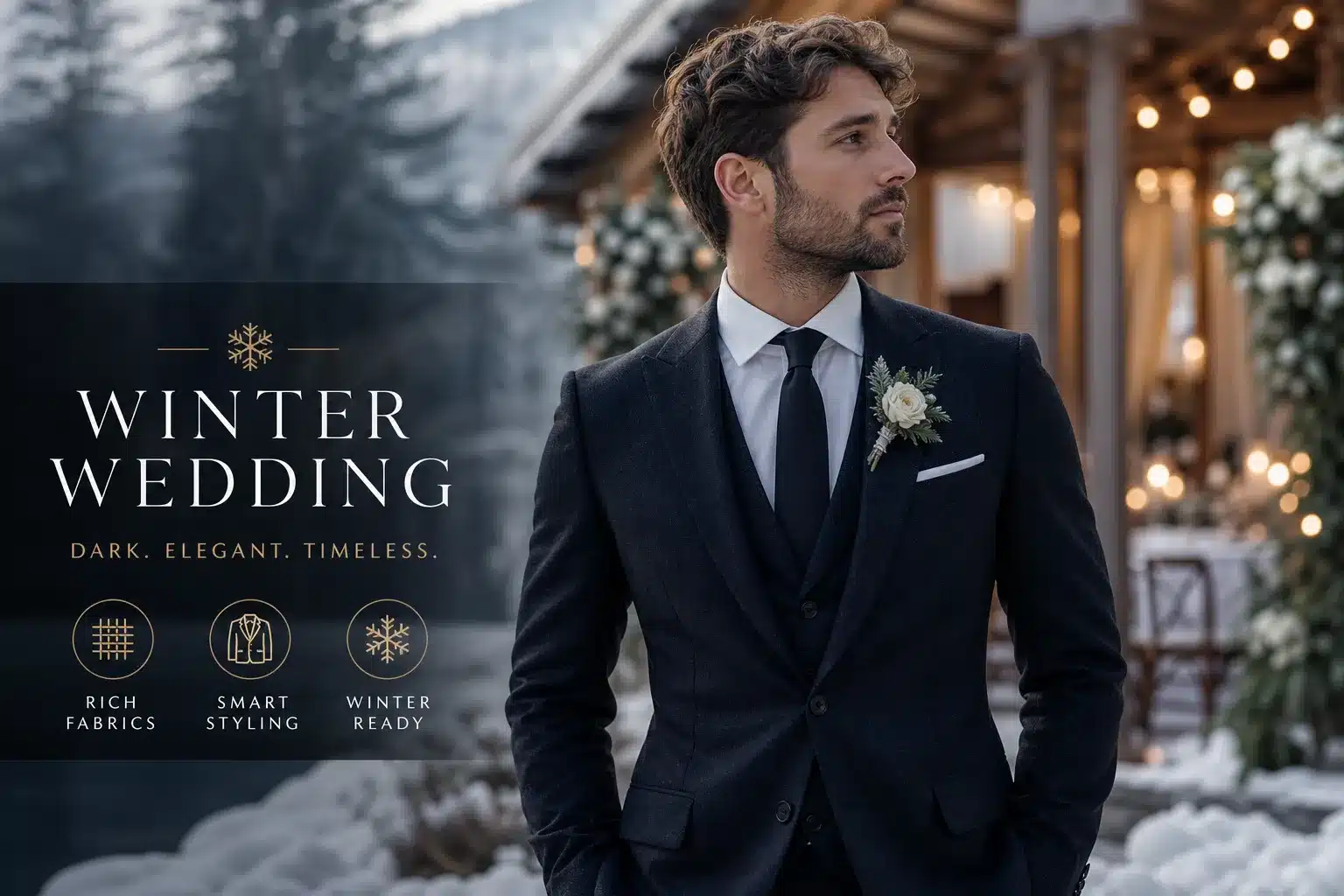
For weddings from October through to February, a mid-weight or heavier wool suit is the appropriate choice. Flannel offers a refined, slightly matte texture that reads as formal and looks excellent in charcoal or dark navy. Tweed is worth considering for country house or rural venues where it feels appropriate to the setting rather than costume-like; the key is choosing a tweed with a clean, tailored cut rather than anything that drifts toward the overly rustic. Both fabrics provide the warmth and structure that cold-weather ceremonies require.
The most common coordination mistake is binary: either matching the groom and groomsmen too closely, or ignoring the wedding palette entirely. Neither approach serves the father of the groom well. The goal is to look as though you belong to the same occasion without looking like an additional member of the wedding party.
Share the palette, not the outfit. If the groomsmen are in navy, the father of the groom in charcoal or slate grey reads as complementary rather than competitive. If the groom is in light grey, a mid-grey or soft blue for the father creates visual harmony without duplication. The father’s suit should sit within the same colour family as the wedding party whilst remaining clearly distinct from it, good father of the groom suit inspiration often comes from simply looking at what the groom is wearing and stepping one tone across rather than one step up or down.
Accessories are where personal expression comes in without breaking coordination rules. If the groomsmen are wearing bow ties, the father of the groom choosing a classic necktie in the same colour family immediately establishes him at the right level of distinction. Pocket squares should echo a secondary accent colour from the wedding palette rather than match the tie exactly; the simplest approach is a solid pocket square in a tone pulled from the florals or bridesmaids’ dresses. The boutonnière should be related to the wedding florals but not identical to the groom’s, perhaps using the same flower in a slightly different arrangement, or incorporating a greenery accent that sets it apart.
A suit that costs £800 and fits well will often look better on the day than a suit that costs £1,500 and hasn’t been altered. For fathers of the groom, fit is where the biggest improvement is almost always available, and it’s frequently overlooked because it feels like an extra step rather than an essential one.
Four areas tend to separate a sharp look from a forgettable one. First, the jacket shoulder seam should sit at the shoulder’s edge, nothing hanging over, nothing pulling back. Second, the sleeve length should show roughly a centimetre to a centimetre and a half of shirt cuff, though your tailor will advise on the exact amount for your build. Third, the trouser break should be minimal to clean, with no heavy stacking at the shoe. Fourth, the jacket waist should have enough suppression to follow the body without pulling. Each of these can be addressed through tailoring, often for less than fathers expect, and each makes a visible difference in photographs taken throughout the day.
This is where a specialist menswear retailer earns its place in the process. At Gabucci Menswear Bath, the team offers a considered, unhurried fitting experience for fathers of the groom, working through fabric, colour, and fit at whatever pace suits the customer. Whether you walk in without an appointment or book ahead of the season, the aim is to remove the uncertainty that makes wedding suit shopping feel overwhelming, arriving at a suit that fits well, in a fabric appropriate to the occasion, in a colour that coordinates with the wider wedding party. For those exploring their options, it is worth seeking out a retailer that combines stock depth with in-house tailoring, so that alterations are part of the service rather than an afterthought.
The suit is the canvas. Accessories are what make it look considered rather than assembled under pressure. For fathers of the groom, the brief is consistent across dress codes: classic, quality, and understated.
Black or dark brown leather Oxford shoes are widely regarded as the most correct choice for formal wedding suits, and patent leather Oxfords are the traditional option for black tie. The watch should be a dress watch or a piece with personal significance, worn on a leather strap; a sports watch or oversized piece sits at the wrong end of the occasion’s formality. Cufflinks offer a subtle opportunity for a personal touch: classic silver or gold in a clean finish works across all dress codes, and something with family significance adds meaning without drawing attention. If wearing a belt, match it to the shoe colour exactly; alternatively, braces are a clean and considered option with trousers that carry the appropriate buttons.
A fresh haircut, trimmed and shaped facial hair if worn, clean nails, and well-moisturised skin are the grooming standards that matter on the day. These details appear in every photograph, handshakes at the door, toasts at the top table, group shots on the steps. Fragrance should be light; the ambition is distinguished, not detectable from across the reception room. These are small things, but they mark the difference between looking polished and looking like someone who thought about everything except the final ten per cent.
The best father of groom suit ideas share a common thread: they start with the dress code and work outward from there. Confirm the formality level and match the groom’s. Settle on a colour, navy, charcoal, and grey are reliable foundations, while lighter tones work well for summer with careful coordination. Choose a fabric suited to the season: linen and lightweight wool for warmer months, flannel and heavier wool for autumn and winter. Coordinate without copying by sharing the palette and differentiating in the details. Above all, prioritise fit, four key points, addressed through tailoring, that make the difference between looking sharp and looking like you borrowed the suit.
For fathers of the groom in the South West and beyond, Gabucci Menswear Bath on Milsom Street offers the kind of considered, unhurried guidance that makes this process straightforward rather than stressful. Whether you’re visiting for a fitting, exploring the current wedding edit, or booking an appointment ahead of the season, the team is well placed to help you find the right suit, in the right fabric, with the right fit. Book an appointment online or visit us in store, and use these father of groom suit ideas to arrive at the wedding looking exactly as the occasion deserves.