Finding the right wedding suit ideas for men in 2026 is less complicated than most men think. The real challenge isn’t deciding between a hundred different options, it’s knowing which rules still apply and which ones you can comfortably set aside. The colour palette is notably broader this year, silhouettes have moved in a more comfortable direction, and the range of fabrics available to men who shop thoughtfully makes dressing for any wedding setting genuinely achievable. Linen for warm outdoor ceremonies, hopsack for summer formality, tweed for autumn barn receptions, the logic is straightforward once you know where to begin.
At Gabucci Menswear Bath, we’ve spent the best part of four decades dressing grooms, groomsmen, and fathers of the wedding party from our boutique on Milsom Street in Bath. We’ve seen every wedding suit trend arrive, peak, and fade. The guide below reflects what’s genuinely worth backing for 2026, whether you’re standing at the altar of a city church or raising a glass in a Cotswolds barn.
By the time you’ve read through this, you’ll have a clear view of your setting, your colour, your fabric, and your fit, and exactly where to go next to get it right.
This year divides neatly into two camps: the timeless classics holding firm, and a wave of earthy, textured alternatives gaining serious ground. Neither camp is wrong. The question is which one fits your wedding, your venue, and your instinct.
Navy remains the single most versatile wedding suit colour available. It works across formality levels, flatters most skin tones, and pairs with the widest range of shirt and accessory combinations of any colour in a man’s wardrobe. Charcoal earns its place for evening and winter settings, where a cooler, more understated tone reads as quietly authoritative rather than simply safe. At Gabucci, the Italian-cut navy suits on the floor demonstrate how this classic translates into something genuinely elegant rather than generic, the cut, the cloth weight, and the details all lift the result well beyond a standard high-street interpretation.
Chocolate brown, camel, olive, sage, and terracotta are the fashion-forward colours gaining the most traction in 2026, particularly for daytime, outdoor, and autumn settings. Tweed, fine checks, and herringbone weaves are the texture story of the year, bringing warmth and personality to looks that might otherwise feel flat. In our view, a patterned fabric in a neutral, well-judged cut often lands better than a bold plain colour for men who want personality without risk. If you’re drawn to something more distinctive than navy but not ready to commit to a full statement, a fine-check or herringbone in a camel or olive base gives you precisely that.
The most overlooked question in men’s wedding dressing isn’t “what looks good?” It’s “what looks right for where I’ll be standing?” Setting drives fabric, formality, and colour more than any trend guide can. Get this decision right first, and everything else becomes easier.
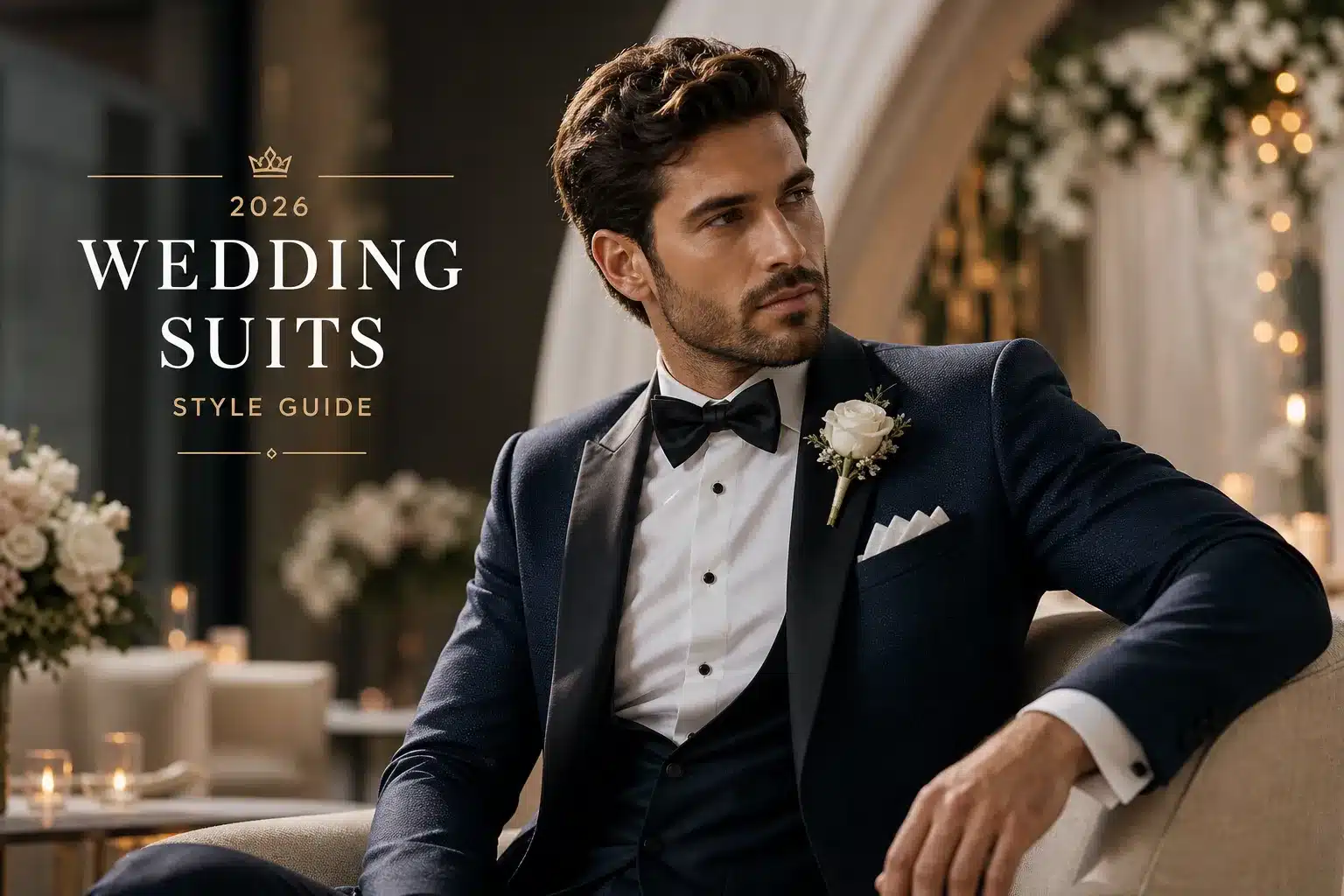
Structured wool or fine-worsted suits in navy or charcoal are the natural choice for church ceremonies and formal reception venues. A three-piece suit or double-breasted jacket elevates the look appropriately without tipping into costume territory. Detail matters most in formal settings: a well-pressed pocket square, a tie rather than a cravat, and a suit that has been bought and professionally tailored typically offer a more personalised finish than standard hire options, a difference that is visible in photographs and felt throughout a long day.
Outdoor settings open up the colour palette considerably. Olive, camel, and warm neutrals all read beautifully in natural light, and tweed becomes a genuine option for late-summer or early-autumn ceremonies in the countryside. Fit is especially critical here: loose or poorly fitted suits move and crease more visibly outdoors, where there are no interior walls to frame the look. A suit that’s been properly tailored holds its shape through a long day in a way that ready-to-wear alternatives rarely match in terms of weight, weave, and finish.
Linen leads for beach weddings, and linen-wool blends suit barn or rustic settings well. Relaxed doesn’t mean unstructured, a well-tailored linen suit from a specialist stockist like Gabucci reads as refined even in the most informal setting. Lightweight and breathable fabrics are non-negotiable for outdoor warmth, and the difference between a linen suit that looks intentional and one that looks like an afterthought comes down entirely to the quality of the cloth and the precision of the cut.
Fabric choice is the single biggest comfort decision a man makes when buying a wedding suit. It’s also the one most men get wrong, typically by defaulting to whatever the high street has in stock rather than thinking about what they’ll actually be wearing all day.
Linen leads for the hottest days and most relaxed settings. For summer weddings that require more formality, hopsack, an open-weave wool cloth, gives structure without overheating and creases significantly less than linen through a long day. Lightweight tropical wool is the compromise for anyone who wants a sharper drape without sacrificing comfort in warm weather. At Gabucci, the lightweight linen and wool options available through made-to-measure and bespoke routes offer fabric choices and specifications that ready-to-wear alternatives rarely match for weight, weave, and finish.
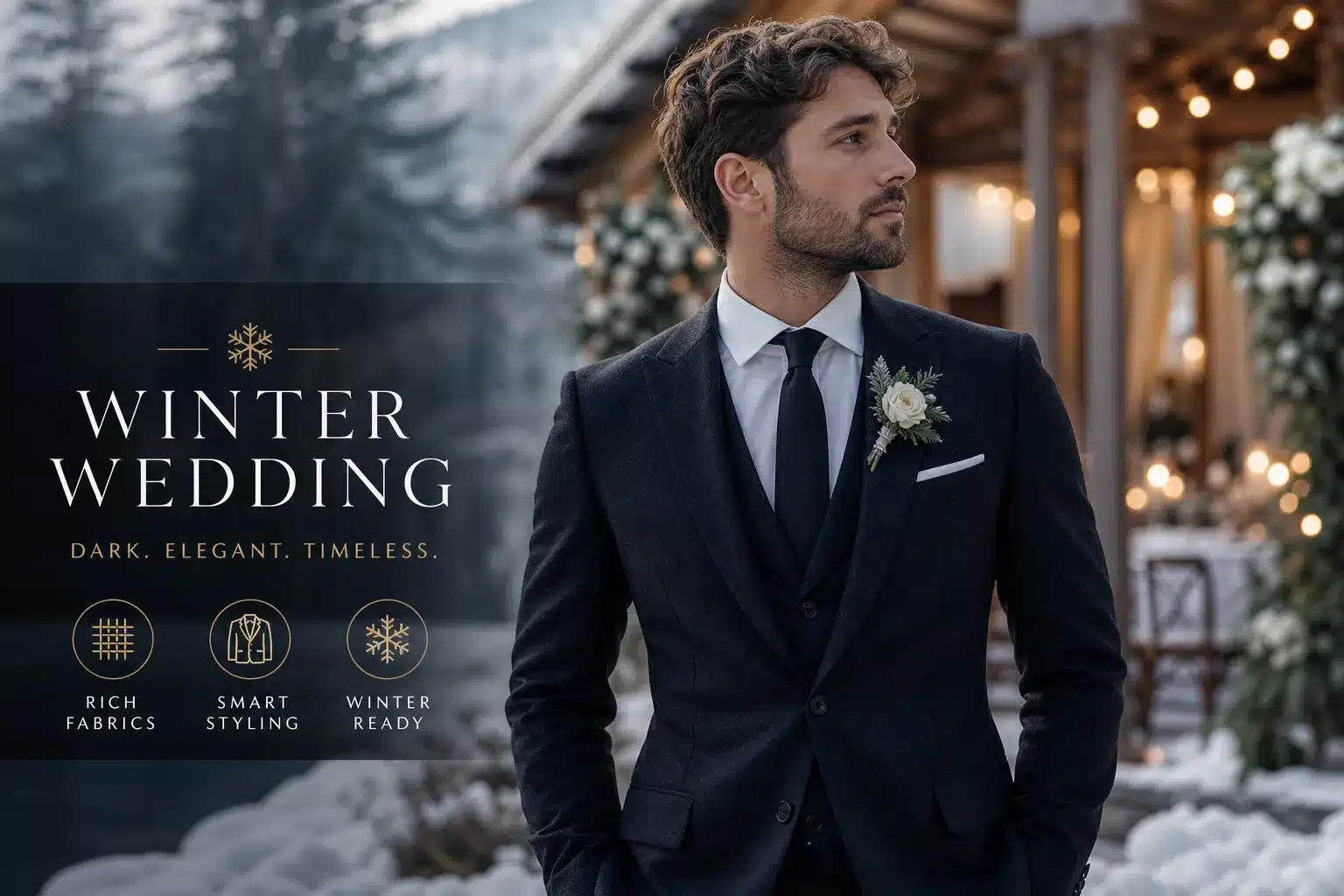
Tweed earns its reputation in the colder months. Heavier, warmer, and inherently appropriate for late-year ceremonies in church, country house, or barn settings, it carries a texture and character that standard suiting rarely achieves. Standard wool suiting covers the colder months well for formal indoor events and remains the most versatile year-round option for men who want one suit to work across multiple occasions. When planning a November or December wedding, consider fabric weight alongside colour: a heavier cloth in a warm tone does far more work than a lightweight fabric in the same shade.
The dominant shift in men’s tailoring right now is a clear movement away from ultra-slim towards a tailored-relaxed silhouette with more ease through the chest, shoulders, and thigh. Trend sources across menswear retail and editorial point to this as the defining direction for 2026, and it benefits most body types.
“Tailored-relaxed” means structured but not tight. The jacket has shape, the trousers carry a straight or slightly wider leg, and the shoulders sit cleanly without hugging. This cut works across most builds and represents the current sweet spot between fashion and function. Slim fit still has a place for lean, slender frames, but it should be genuinely slim rather than the over-fitted silhouette that dominated a decade ago and now reads as dated in wedding photographs.
Double-breasted is the bolder 2026 choice, back with real authority, particularly for formal and church settings. It works best on taller and broader frames where the front can button cleanly without pulling across the chest. Three-piece suits add gravitas for grooms and fathers of the wedding party without requiring a completely different outfit: the addition of a waistcoat in the same cloth changes the register of the look entirely, signalling intention and care in a way that a two-piece alone rarely achieves.
The most common mistake men make at weddings is either overdressing for their role or underdressing out of uncertainty. The question of formality is really a question of role, and each role has a clear answer.
The groom’s suit should be more intentional, not necessarily more ostentatious. A richer fabric, a three-piece, or a more distinctive colour achieves this without tipping into fancy dress. The groom should invest in professional tailoring: alterations from an in-house tailor transform a good suit into one that reads as made for him specifically, and that difference is visible in every photograph taken on the day.
Groomsmen should complement the groom rather than compete: usually the same base colour in a simpler cut, or a complementary shade within the same palette, with plainer accessories throughout. Guests follow the dress code with a clean, understated suit. Navy or charcoal almost never goes wrong for a formal wedding guest. If the dress code is smart casual or garden party, a blazer in a relaxed fabric paired with tailored trousers is the safer interpretation and the one least likely to feel wrong in the room.
Every wedding suit decision eventually comes down to money. Knowing what each price tier actually delivers helps you spend in the right place rather than discovering the gap too late.
The three tiers break down clearly. Budget covers roughly £100 to £400 and includes high-street ready-to-wear or hire, with limited fabric choice and alteration costs often added separately. Mid-range sits between £400 and £900 and is where most UK grooms find the best value: quality ready-to-wear or made-to-measure with proper fitting included, better cloth, and a finish that holds up through a full day. Premium starts around £900 and rises steeply for bespoke and made-to-measure work, which includes multiple fittings, an extensive cloth choice, and the most personalised result available. Industry figures commonly cited across UK menswear retail suggest the average spend on a purchased wedding suit sits around £700 to £900, placing it in the upper mid-range. A well-made suit bought for a wedding becomes a career and social wardrobe staple for years afterwards; the cost-per-wear calculation almost always favours buying over hiring.
Tie, pocket square, shirt, and shoes are where the look either coheres or falls apart. A few basics are worth knowing from the outset. A tie reads as more traditional and formal than a bow tie. The pocket square should complement rather than match the tie exactly. Shoe colour follows suit colour logic, tan and cognac work with navy and brown suits, while black is reserved for charcoal and more formal occasions. Think about the full outfit from the start rather than assembling accessories as an afterthought on the morning of the wedding.
For anyone who wants to approach this with proper care, Gabucci Menswear Bath on Milsom Street is well worth a visit. The team specialises in wedding suit dressing for grooms, groomsmen, best men, and fathers of the wedding party, with in-house tailoring and a range of Italian and English designer suits spanning lightweight linen through to heavier cloths suited to winter ceremonies. Walk-ins are welcome; appointments suit those who prefer a dedicated session with the team.
2026 offers more freedom than most men realise. The palette is broader, the silhouettes are more comfortable, and the range of settings men are dressing for is more varied than ever. The most important move is to start with the setting and work outward, fabric, colour, cut, and accessories in sequence rather than in reverse. These are the wedding suit ideas for men that photograph well, feel right through a long day, and remain useful long after the wedding itself.
A properly tailored suit is nearly always worth the additional investment. That investment is visible in every photograph, comfortable through every hour of a long day, and relevant every time you wear it afterwards, a very different calculation from a hire that goes back the next morning.
Visit us on Milsom Street in Bath to really understand and experience the quality of our suits and fabrics, and of course to speak with our team directly. We’ll help you find the right suit for your setting, your role, and your day.