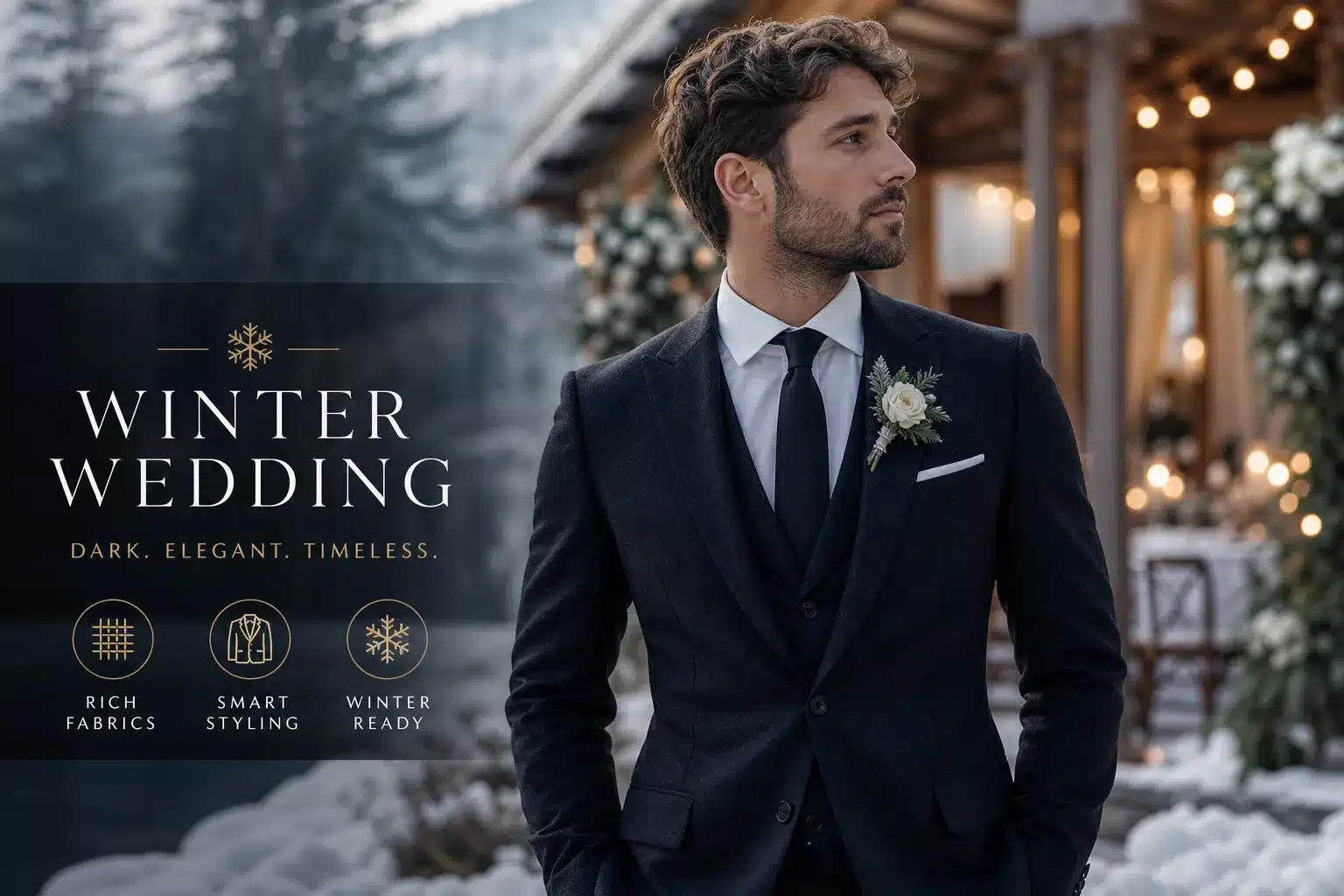
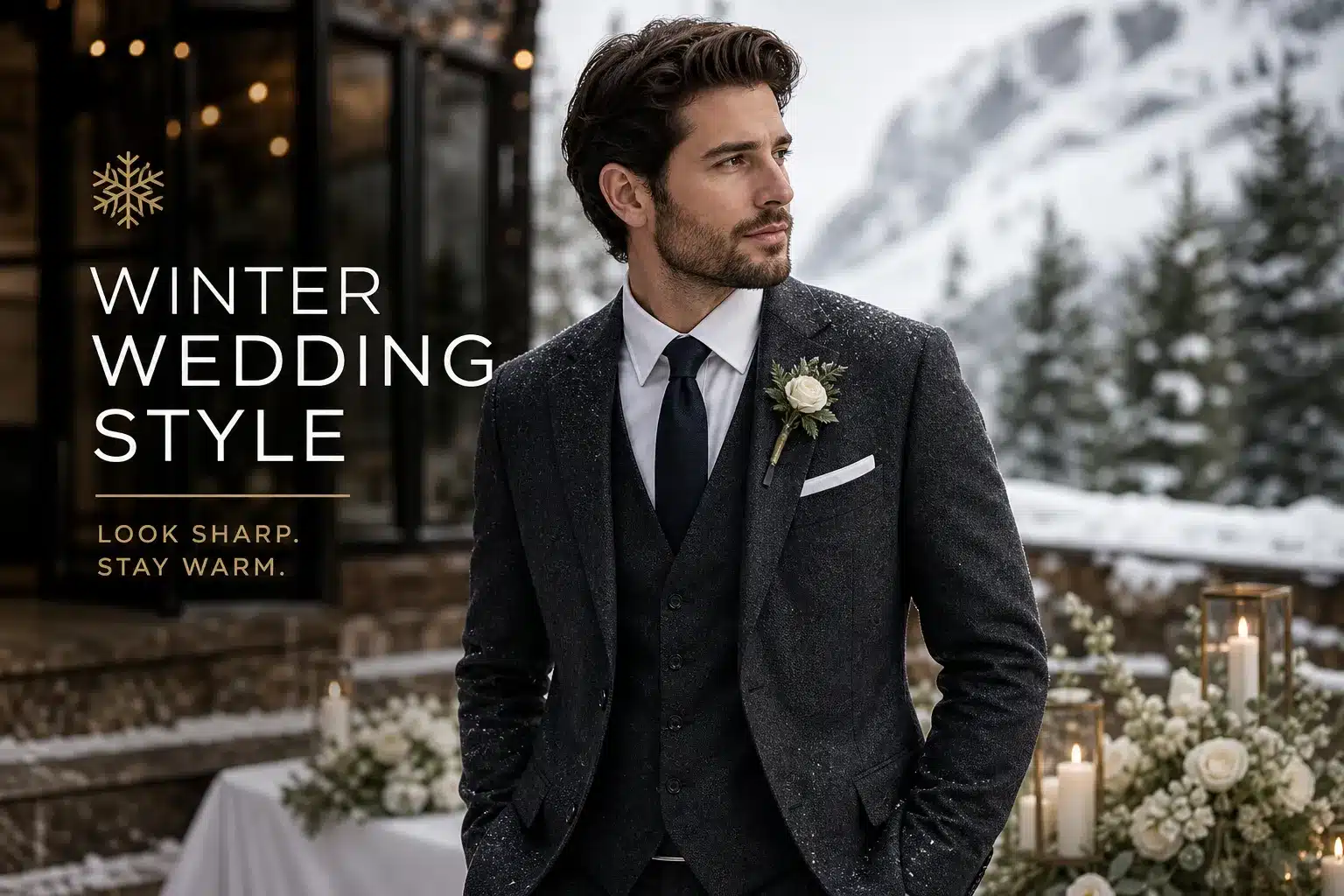
How do I choose a wedding suit for a cold weather ceremony? It is a question that deserves a more thorough answer than most wedding guides provide, many focus almost exclusively on warm-weather occasions, leaving winter grooms to piece together advice that was never written with them in mind. You want to look composed and camera-ready throughout the day, yet you are also facing a cold church, a draughty barn, or a frost-edged outdoor ceremony where June’s advice simply falls apart. The result, too often, is a groom who spends the ceremony rigid with cold rather than present in the moment.
The good news is that dressing well for a cold-weather wedding is not complicated. It comes down to three deliberate decisions: the right cloth, the right construction, and a few discreet layering choices. Get those right, and you keep genuinely warm without disturbing the line of the suit. This is the kind of guidance that the team at Gabucci Menswear Bath have been offering grooms on Milsom Street for close to four decades, fitting men for winter ceremonies across the West Country and beyond. What follows draws on that expertise, covering fabric selection, suit construction, colour, layering, outerwear, and accessories, so you can approach every decision with confidence.
The single most important decision when choosing a wedding suit for a cold weather ceremony is cloth weight. Construction, lining, and layering all build on that foundation, and choosing the wrong fabric at the outset creates problems that nothing else can fully fix.
Flannel earns its reputation as the go-to winter suiting fabric for good reason. Its brushed surface traps warmth against the body, and because it is a wool finish rather than a separate fibre, it drapes with an elegance that reads formally in photographs. It works equally well in an indoor ceremony and an exposed outdoor setting, and it rarely feels heavy or stiff in the way that some denser cloths can. For most winter grooms, flannel is the strongest starting point, a fabric that delivers warmth, formality, and versatility in equal measure.
Tweed is among the warmest options available to a groom. Its thick, textured weave traps air and insulates with genuine efficiency, making it particularly well suited to countryside barns, estate house ceremonies, and rural outdoor settings. It has a strong personality, though: it sits less naturally in urban venues or black-tie contexts. If your venue lends itself to tweed, it is an outstanding choice. If not, flannel or heavyweight wool will serve you better without any sacrifice in warmth.
Heavyweight wool is a strong all-rounder, warm and versatile across most venue types and formality levels. Worsted wool is combed for a smoother, crisper finish, which reads more formal and polished but sacrifices some of the insulation that flannel or heavyweight wool provides. If your dress code is strictly formal and the venue will be well heated, worsted is a legitimate choice. For genuinely cold conditions, a heavier wool or flannel cloth is the more practical decision. At Gabucci, the cloth range includes a wide variety of weights and weaves, so this conversation can be had with time and without pressure.
Fabric determines how warm the cloth itself is. Construction determines how effectively that warmth is delivered across the body. These are two distinct considerations, and both matter considerably when planning a winter wedding outfit.
A waistcoat adds a meaningful extra layer of insulation precisely where the body loses heat most readily: across the torso. In practical terms, that additional coverage makes a real difference during a long outdoor ceremony or an exposed walk between venue spaces. Beyond warmth, a well-fitted waistcoat looks structured and deliberate in photographs, giving the groom a complete, authoritative silhouette. For many winter weddings, the three-piece suit is a leading recommendation, and for good reason, since it addresses both the practical and the aesthetic demands of cold-weather dressing in a single decision.
Double-breasted jackets offer a natural warmth advantage: the extra fold of fabric across the front and the more enveloping closure add insulation without requiring additional layering. They also photograph well and carry a confident formality that suits winter settings. Single-breasted suits remain entirely appropriate for cold-weather weddings, particularly when cut in flannel or heavyweight wool. The double-breasted option simply gives you more warmth built into the construction itself, which can be a meaningful consideration on a January morning. Ultimately, the choice comes down to formality level and personal preference rather than warmth alone.
A full lining covers the entire interior of the jacket and adds a layer of insulation beyond the cloth itself. A half lining covers only the upper back and sleeves, reducing bulk but also reducing warmth. For most winter ceremonies, a full lining is generally the better choice, though it is worth noting that venues with strong central heating may make the additional warmth less critical. When ordering with a bespoke or made-to-measure service, you can specify a heavier interlined construction, which adds meaningful warmth without any visible change to the exterior of the suit. This is worth raising explicitly when you come in for a fitting.
Winter weddings give grooms genuine permission to move beyond the safe neutral territory of warm-weather ceremonies. Deeper, richer colours work with low winter light rather than against it, and they tend to photograph with far more definition than pale or mid-toned alternatives.
These remain the strongest choices for formal winter weddings because they deliver consistently across every photographic condition. Charcoal flannel and midnight navy tweed are particularly effective pairings of colour and cloth, both coordinate easily with most bridesmaid palettes and work across stone churches, period hotel ballrooms, and contemporary venues alike. Of these, midnight navy is widely regarded as one of the most consistently photogenic choices for a winter groom, offering depth without severity.
These are not daring departures at a winter wedding; they are genuinely appropriate choices that the season actively supports. Bottle green photographs with strong depth in low winter light. Burgundy gains warmth and dimension under candlelight or indoor reception lighting. The key to wearing these tones without veering into costume territory is keeping accessories in neutral or complementary shades rather than doubling down on the richness. In our experience at Gabucci, a burgundy suit with a white shirt and a dark navy tie reads polished and deliberate, whereas pairing it with a burgundy tie and matching pocket square can tip into the overdone. Keep the suit as the statement and let the accessories support it.
The most common mistake winter grooms make is adding thermal layers without considering how those layers interact with the suit’s cut. A good suit is built to a specific structure, and anything underneath that disrupts that structure will show in the jacket’s fit and in the photographs.
The most effective thermal underlayer for suiting is a close-fitting, lightweight merino wool crew-neck worn directly under the dress shirt. Merino is thin enough to sit flat beneath tailoring, it wicks moisture effectively throughout a long day, and it is widely recommended for its temperature regulation in a way that purely synthetic alternatives cannot match. The critical detail is fit: choose a garment described as slim or close-fitting rather than relaxed, because any excess fabric will bunch at the collar, cuffs, and shoulders where it is most visible. A well-chosen merino base layer is genuinely invisible under the suit and makes a substantial difference to comfort across the whole day.
The lower half is where most grooms overlook the layering opportunity entirely. Fine merino leggings or lightweight thermal long johns worn under suit trousers add real warmth to the legs without changing the drape of the cloth, provided they fit closely and are cut without bulky seams at the knee or thigh. Choose a flat-seam garment in a neutral colour and make sure the leg opening sits cleanly inside the trouser rather than bunching at the ankle. It is a small detail that makes a considerable difference during a long outdoor ceremony in January.
A well-chosen coat is the single most effective thing a groom can do against British winter weather. It also appears in photographs during arrival, outside the venue, and often at the reception, so it deserves the same thoughtful approach as the suit itself.
A knee-length wool topcoat is the most versatile option for a wedding groom. It sits cleanly over any suit from lounge to morning dress, covers the jacket hem properly, and reads as formal in photographs. The Chesterfield is the more refined alternative: its sleeker lapel silhouette and closer-cut body give it a particularly polished appearance that suits very formal ceremonies, or those where the groom wants the outerwear to contribute to the overall look rather than simply sit on top of it. In terms of colour, camel worn over a dark charcoal or navy suit is one of the more striking combinations available to a groom, a stylist’s recommendation rather than a rule, while charcoal and navy remain safe, versatile choices across all colour pairings.
For most formal weddings, puffer jackets, parkas, and casual rain shells sit at odds with the formality a suit creates, they disrupt the overall look immediately and tend to read poorly in arrival and outdoor photographs. The coat should be as considered a purchase as the suit itself. If you have spent time selecting the right cloth and construction, it is worth protecting that investment with outerwear that is equal to it in quality and intention. A wrong coat choice is also, practically speaking, one of the easiest to avoid, since the alternatives are both warmer and more photogenic.
The finishing details of a winter wedding outfit are where warmth and formality meet most directly. Getting these right means you arrive polished and stay comfortable throughout the day.
For footwear, black Oxfords remain the most formal choice for a church or indoor ceremony. Polished Derbies or sleek leather ankle boots are the better option when the day involves outdoor elements, wet ground, or a country setting where you will spend time on grass or gravel. Wear fine merino dress socks in dark navy, charcoal, or black rather than bulky thermal alternatives that distort the shoe silhouette. Leather gloves in black or dark brown are the most photogenic warm option and look entirely appropriate with a wool topcoat. A plain wool or cashmere scarf in a neutral tone, black, camel, or a deep navy, completes the look cleanly without drawing attention away from the suit.
Many hire services focus primarily on lighter-weight, more generic stock, which can significantly limit your winter-specific options. Fabrics such as flannel, tweed, or heavyweight wool are rarely offered through hire, and construction details that contribute meaningfully to warmth, a heavier lining, a full canvas, a specified cloth weight, may simply not be available. A purchased suit, fitted by an in-house tailor to your exact measurements, drapes properly and wears comfortably from the ceremony through to the end of the evening. At Gabucci Menswear Bath, the bespoke and made-to-measure service allows you to specify every detail of the cloth, lining, and construction, so the suit functions precisely as a winter garment should. Beyond the wedding day itself, a suit bought with care becomes a wardrobe piece you return to for years.
The decisions that make a winter wedding suit work are straightforward when approached in the right order. Start with the fabric: flannel or heavyweight wool for most winter ceremonies, tweed for outdoor or rural settings. Build warmth into the construction with a three-piece cut, a full lining, and, where possible, a double-breasted front. Layer discreetly beneath with a close-fitting merino base layer and fine thermal trousers. Complete the outfit with a structured wool topcoat and accessories chosen with as much care as the suit itself.
Knowing how to choose a wedding suit for a cold weather ceremony is ultimately about sequencing these decisions correctly, fabric, then construction, then layering, then outerwear, and resisting the temptation to treat any one element as optional. A winter wedding suit is also one of the few purchases where buying genuinely outperforms hiring, because the warmth, fit, and fabric options that cold-weather dressing requires are rarely available through a hire service.
If you are planning a winter wedding and would like to talk through your options, the team at Gabucci Menswear Bath are always happy to help. The conversation is worth having early, and it is one we have been having with grooms on Milsom Street for close to four decades. Book a consultation or visit us in Bath, and we will make sure every detail is right for the day.